Physical readiness

Military fitness preparation starts with a safe base.

You do not need to train like a special forces candidate on day one. You need consistency, honest progression, recovery, and a body that can handle selection preparation without breaking down.

Military fitness preparation

Build the base.

Fitness preparation starts with consistency, not ego.

The five foundations

  1. Aerobic base: walking, jogging and running progression.
  2. Bodyweight strength: push, pull, squat, hinge and trunk control.
  3. Mobility: hips, ankles, shoulders and back.
  4. Recovery: sleep, rest days and injury honesty.
  5. Specificity: only add harder training when the base is stable.

A practical 6-week starter structure

WeekFocusExample
1Baseline and routine3 easy walks/runs, 2 bodyweight sessions, mobility daily.
2ConsistencyAdd light intervals only if joints feel good.
3Strength foundationPush-ups, squats, lunges, planks, rows or towel rows.
4Work capacityCombine easy running with short controlled conditioning blocks.
5Assessment practicePractice timed efforts without maxing out every session.
6Review and adjustIdentify weak points, reduce injury risk and plan the next block.

Common mistakes

  • Training too hard too soon because motivation is high.
  • Ignoring sleep and nutrition while increasing running volume.
  • Testing every workout instead of training.
  • Copying elite programs before building basic capacity.
  • Hiding injuries because you want to seem tough.

Use the Military Fitness Starter Plan if you want this structure as a printable plan with trackers and progression pages.

Get the Fitness Starter Plan
Push League

Foundation and advanced push-up movements.

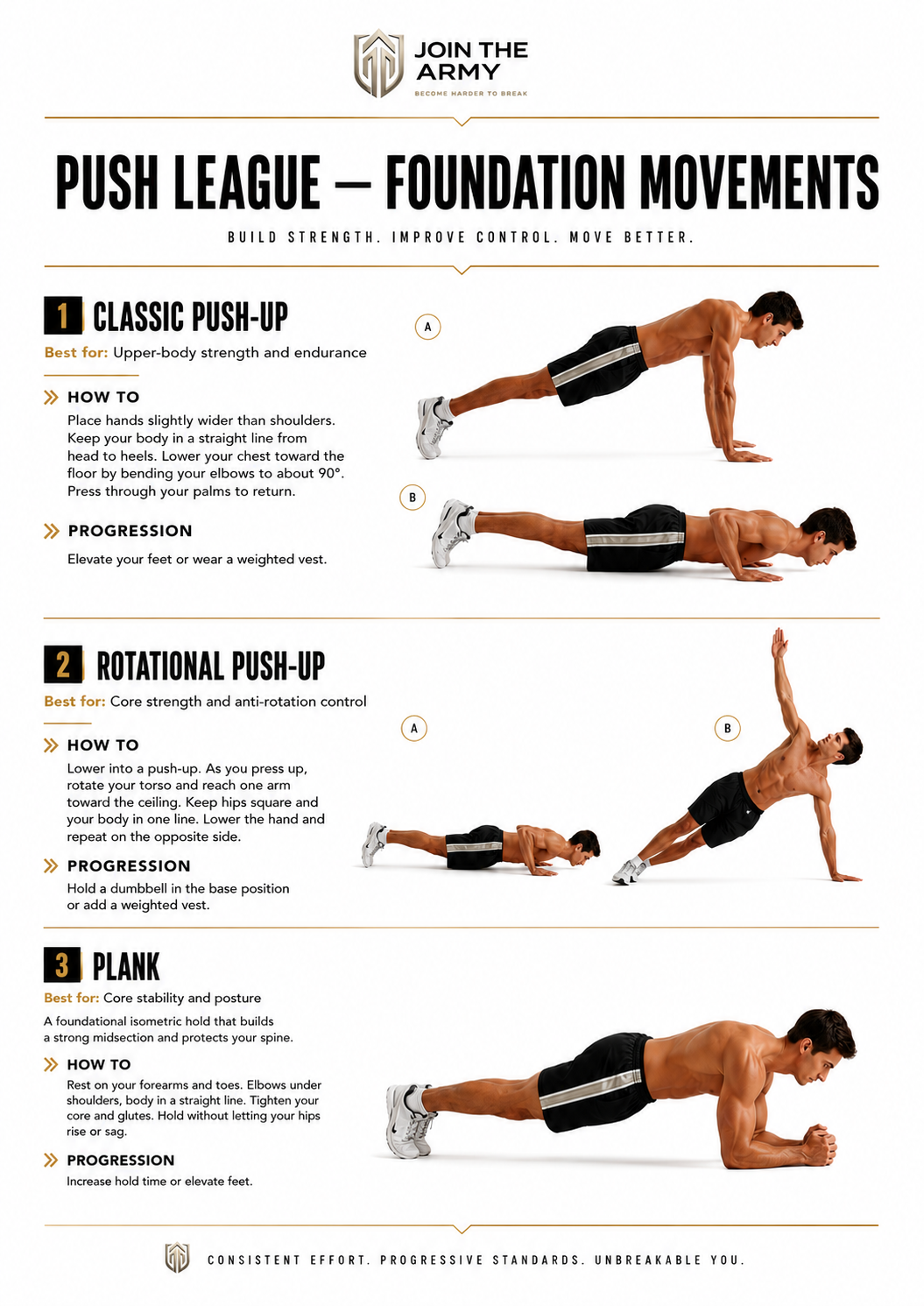
These movements are included as a practical strength module in the Military Fitness Starter Plan. They train pressing strength, core control, shoulder stability and disciplined progression.

Push League foundation movements

How to use the Push League

Start with the cleanest version you can control. A future applicant gains nothing from sloppy repetitions. Quality comes first, volume comes second, advanced variations come last.

  • Classic Push-Up: base upper-body strength and trunk control.
  • Rotational Push-Up: shoulder stability and anti-rotation strength.
  • Plank: posture, bracing and midsection endurance.
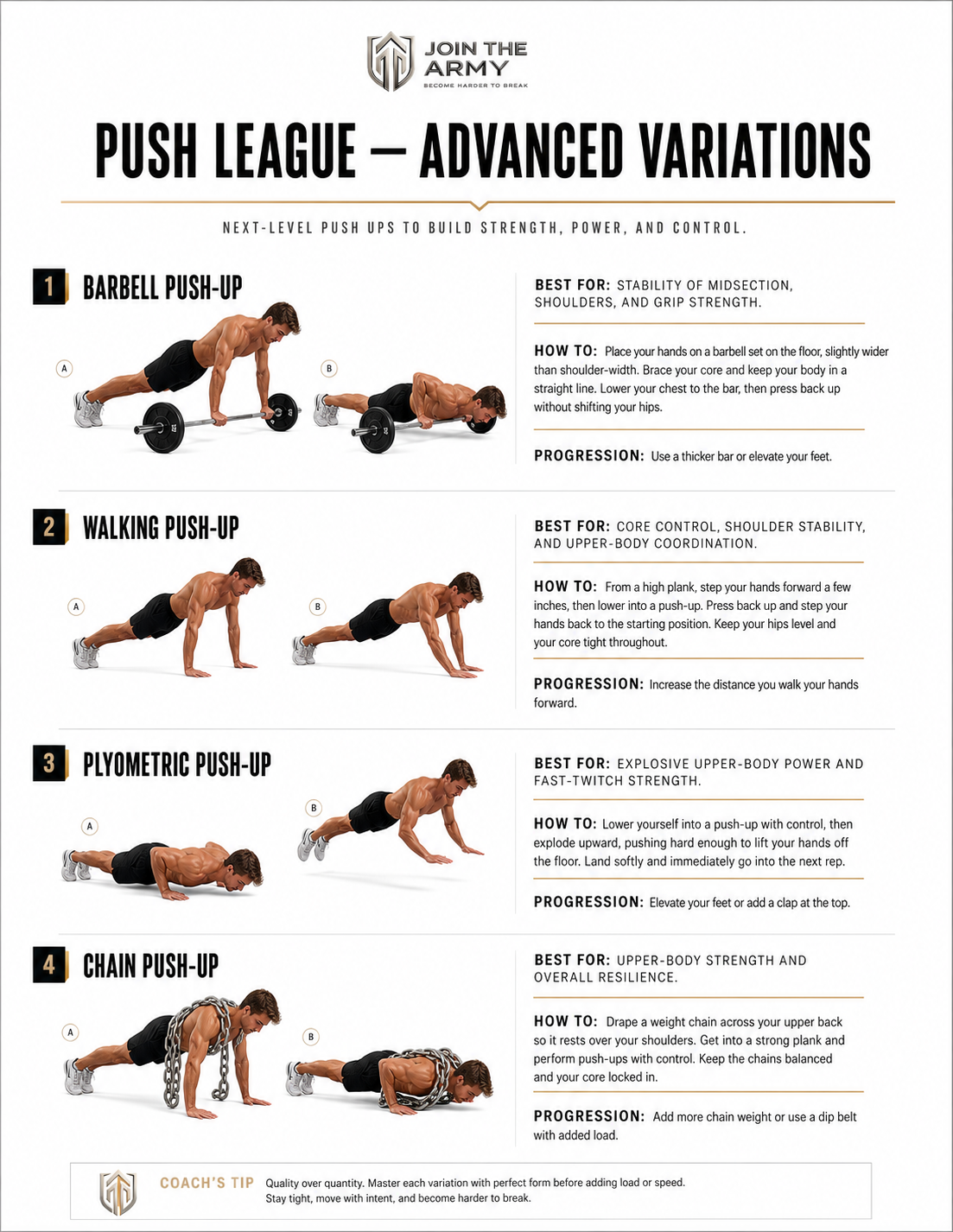
  • Barbell Push-Up: stability challenge for advanced trainees.
  • Walking Push-Up: coordination and shoulder endurance.
  • Plyometric Push-Up: explosive pressing power.
  • Chain Push-Up: high-level strength progression only after the base is strong.

These are preparation exercises, not medical advice. Stop if you feel pain, and use a qualified coach or medical professional when needed.

Push League advanced push-up variations